In August 2026 a staff writer at What Hi-Fi? went to a listening bar in central London that looked the part, brown wood and leather seating, and reported that "few people there seemed to be paying attention to the music". At points she "couldn't even hear the track over the noise of the room". Her verdict was style over substance, and her worry was that the whole movement ends up with listening bars where nobody listens.
She is not the first. Derrick Gee, who has DJed at Spiritland, called the format "surprisingly formulaic" back in 2023: the Japanese menu, the shiny new system, the culture kept as decoration. And in April an AFP piece on the trend quoted Dan Wissinger, co-owner of Eavesdrop in Brooklyn, with the bluntest line anyone has offered: "If they don't have acoustic treatment, then they're just fake listening bars."
So here is a test. Five things, each one taken from a room that does it, each one checkable from the pavement or the bar's own page before you spend a night on it. A room does not need all five. A room with none of them is a bar with a turntable, which is a fine thing to be, as long as nobody calls it something else.
1. Treatment you can see

Wissinger's test first, because it is the one you cannot fake with a menu. Acoustic treatment means the room has been changed so that the sound reaching you comes from the speakers and not from the walls: panels, heavy curtains, soft surfaces where the hard ones would ring. Listener in Paris built a soundproofed underground room for a system worth about €200,000 at list price. Hidden Grooves in Shoreditch had its sound designed by Project Audio, a firm that does Ibiza clubs, around Tannoy speakers at about £50,000 each. Public Records in Gowanus, Brooklyn, opened in a former animal shelter in April 2019 and wrapped its Sound Room, which holds up to 200, in perforated wood, walls and ceiling. You do not need those numbers. You need to look up and see something other than plaster.
2. A rule you can see
The jazz kissa of Japan were built on rules. Dig, in Tokyo, banned talking and turned the lights down; Eagle still will not let you speak before six in the evening. The rule was not a style, it was the product. The modern rooms that mean it have found their own versions. Freaking Out The Neighborhood in Bangkok plays every album first track to last and puts a card on the table asking for low voices. Deaf Shop in Chiang Mai gives Thursday to listening and Saturday to dancing and tells you which is which on the door. Look for the card, the sign, the line on the Instagram bio. If the only rule is the dress code, it is a bar.
3. A system the owner can name

What Hi-Fi?'s own advice, in the same piece, is that a bar with a detailed description of its amplification, turntables and speakers is a good sign it cares. Spiritland at the Barbican names its two Living Voice R252s before it names the chef. SIWILAI Sound Club in Bangkok names Devon Turnbull's OJAS horns, a Urei 1620 and a McIntosh amplifier. Thirty Records in Chiang Mai names its Pioneer CS-77A and Diatone DS-36BR speakers on the wall. The test is not whether the kit is expensive. It is whether anyone in the building can tell you what it is without looking.
4. An album played whole
A playlist is a radio station. An album is a decision. Spiritland's whole model, since the King's Cross room opened in 2016, is one record a day at a fixed hour, six then, five now at the Barbican. Freaking Out The Neighborhood plays to the run-out groove. OBi Record Bar in Silom is built for listening or quiet talk, with rare Japanese pressings as the point of the place. If a bar can tell you what is playing at five on Thursday, it is thinking in albums. If it cannot, it is thinking in atmosphere.
“The vision was always to keep the space simple and humble, and not distract from the mission of the sound system.”
Amit Patel, Brilliant Corners, to The Spaces, November 2023
5. A person choosing
In 1933 Mamoru Yoshida spent a third or more of his wages importing jazz records so that strangers in Yokohama could hear them in his coffee shop, Chigusa. The listening bar began as one person's taste, offered by the cup. Ninety years on, that is still the difference between a room and a brand: somebody is there, choosing, and would be embarrassed to play the wrong thing. Brilliant Corners on Kingsland Road, which opened in 2013 with four 1970s Klipschorns in a former bank, put it plainly through co-founder Amit Patel: keep the space simple and do not distract from the sound system. The person choosing is part of the system.
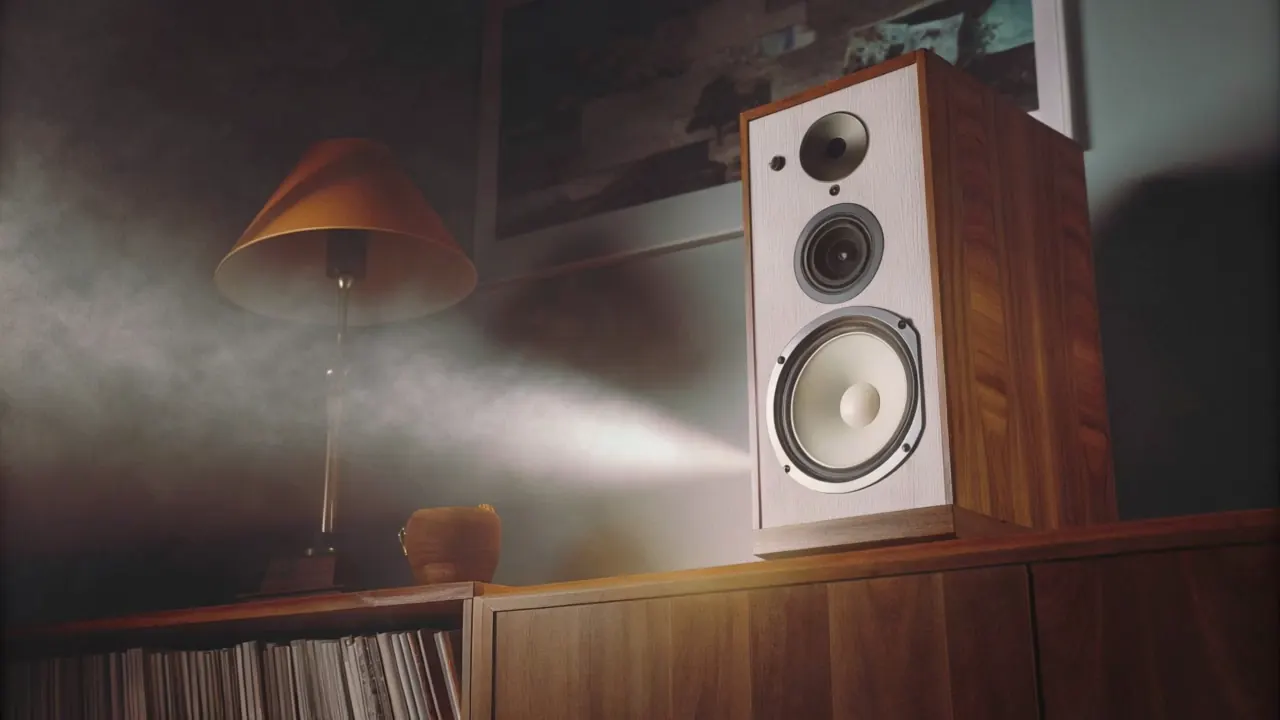
Public Records, a room that passes


What the test is not
It is not a price list. The honest audiophile verdicts on the new rooms tend to say the same thing: the system was not the best they had heard, and the night was good anyway, because the room and the people carried it. It is not a Japan test either. Bangkok did not get the listening bar second-hand; Chiang Mai opened its first one, Deaf Shop, against demand and on purpose, and co-founder Laurens Brouwer said "no one was waiting for this, but we felt it was what the city needed". And it is not a rule against dancing. Deaf Shop's split week is a more honest answer to the London problem than London has found: say which night is which.
Use it like this. Before you book, open the bar's page and look for three of the five. On the night, look up at the ceiling and down at the table. If there is treatment, a card, and someone at the deck who can name the amplifier, sit down and stop talking. If there is a turntable and a negroni, have the negroni. Both are fine. Only one is a listening bar.
The five, in one place
- Treatment you can see: panels, curtains, soft surfaces, a room changed for sound.
- A rule you can see: a card on the table, a sign, a line on the door or the bio.
- A system the owner can name: amplifier, turntable, speakers, without looking.
- An album played whole: a fixed hour, a named record, the run-out groove.
- A person choosing: somebody in the building whose taste the room is.
Featured in this piece
The rooms and the people
Every place and artist in this piece has its own page in the atlas or on Pulse, with sources folded underneath.
Freaking Out The Neighborhood
Bangkok, Thailand
Deaf Shop
Chiang Mai, Thailand
SIWILAI Sound Club
Bangkok, Thailand
OBi Record Bar
Bangkok, Thailand
Thirty Records
Chiang Mai, Thailand
Bar Martha
Tokyo, Japan
FAQ
Questions people ask
What makes a listening bar different from a normal bar?
A listening bar is built around a sound system and a person choosing the records, and the room asks you to keep your voice down. The five signs of a real one: visible acoustic treatment, a rule you can see (a card on the table, a sign), a system the owner can name, an album played whole at a fixed hour, and a person choosing the music rather than a playlist.
What is the etiquette at a listening bar?
Keep your voice low, do not talk over the record, and follow the room's own rule where it has one. Freaking Out The Neighborhood in Bangkok puts a card on the table asking for low voices; some Japanese jazz kissa ban talking at set hours; Deaf Shop in Chiang Mai keeps some nights for listening and others for dancing and says which is which.
Why are there so many listening bars now?
Records are back (vinyl in the United States passed a billion dollars in 2025, the nineteenth straight year of growth, and Britain sold 7.6 million LPs) while clubs have closed, so people own music again and have nowhere good to play it. The form, from Japan's jazz kissa, was exported through Brilliant Corners in London (2013), Spiritland (2016) and Public Records in Brooklyn (2019), and reached Bangkok and Chiang Mai in the 2020s.
Sources (15)
- What Hi-Fi?, Robyn Quick, This listening bar experience made me question whether the trend has gone too far, 10 Aug 2026
- AFP via eNCA, Adam Plowright, Listening bars bloom as hottest new nightlife trend, 15 Apr 2026
- Derrick Gee, Are hi-fi bars the new tapas bar?, 1 Apr 2023
- The Spaces, Brilliant Corners, 21 Nov 2023
- In Sheep's Clothing Hi-Fi, Jazz Café Chigusa, 30 Apr 2024
- Gasholder, So what on earth is Spiritland all about?, 27 Oct 2016
- DJ Mag, New Spiritland listening bar to open in London's Barbican Centre, 9 Oct 2026
- Time Out Chiang Mai, Inside Chiang Mai's vinyl revival, 1 Aug 2025
- Sonic Paths, Hear more, say less (feature with 24 folded sources), 20 Oct 2026
- Analog Planet, RIAA 2025 year-end report, 17 Mar 2026
- Digital Music News, UK vinyl 2025, 31 Dec 2025
- Wikipedia, Public Records (venue), checked 20 Oct 2026
- Mixmag Asia, Siwilai Sound Club, 27 Oct 2020
- Time Out Bangkok, Freaking Out The Neighborhood, 24 Jul 2026
- The Standard, OBi Record Bar Silom, 13 Jul 2026
Every fact in this piece comes from one of these, read on 20 October 2026.