What singeli is
Producers loop and speed up rhythms and melodies from older Tanzanian styles such as taarab and mchiriku into interlocking, high-pitched patterns, and MCs deliver short, satirical bursts about city life, money, police and love. It relies on high frequencies more than bass, and its punk energy has drawn comparisons with gabber.[1][2][3][4]
Singeli, also written sengeli.
Tempo
About 200 to 300 BPM[1][5][6]. The Guardian (2018): 'a melon-twisting 200 to 300 bpm'. A 2024 Cambridge University Press review: tracks 'often sped up beyond 200 BPM'. Wikipedia: often 200 to 300.
On the Pulse map
Dar es Salaam sits at 200 BPM (a published range of 200 to 300). That is each city's own pulse, not a figure for this sound.
Where it comes from
Dar es Salaam: Tandale and Manzese (Nyege Nyege Tapes); Wikipedia, citing academic work, narrows it to Mtogole in Tandale ward, Kinondoni District · Mid-2000s. Boiler Room (2018) says 2006 at kigodoro parties; the Guardian and Nyege Nyege (2017 to 2018) say it had been developing for about 15 years[3][4][6][7]
It grew out of kigodoro (plural vigodoro) all-night parties, which Wikipedia (citing academic work) says were first organised by Zaramo women in Manzese and Tandale, with taarab cassettes played and MCs later invited to perform over them. DJs isolated, looped and sped up instrumental sections of older songs (David Kerr, University of Birmingham). Earlier micro-scenes it drew on include mchiriku (made on cheap Casio keyboards, from Mwananyamala), segere and sebene.
Where the sources disagree
Birth year. Boiler Room says 2006; Wikipedia says mid-2000s; the Guardian and Nyege Nyege (2017 to 2018) say about 15 years, which points to around 2003.[4][6][1][3]
Release date of 'Sounds of Sisso'. Bandcamp lists 10 June 2017 and the Cambridge review says June 2017; the Guardian says December 2017 and Boiler Room places the launch party in late 2017. The tape came out in June; the Dar launch party was later.[3][5][1][4]
Who carried it
- Nyege Nyege Tapes (Kampala)label
founded at the start of 2017; 'Sounds of Sisso' (2017) was the first album-length singeli compilation; eight singeli albums by 2024, three on Pitchfork's best electronic releases of 2019[4][5]
- Sisso Recordsstudio and label (Mburahati, Dar es Salaam)
managed by Abbas Jazza[1]
- Pamoja Recordsstudio
DJ Duke's[1]
- Nyege Nyege Festival (Jinja, Uganda)festival
- Ilé Ijó (Lagos)party
bi-monthly rave that plays Tanzanian singeli alongside house and drum & bass
Moments
- 2017-06-10Nyege Nyege Tapes releases 'Sounds of Sisso' on cassette and digital[3][5]
- 2018Bamba Pana's debut LP 'Poaa'; Bamba Pana and Makaveli play Berlin's Panorama Bar and Unsound in Kraków[4]
- 2018-12The Guardian names singeli among the standout new dance styles of 2018[1]
- late 2010s to 2020sSpreads across Tanzania and, from 2020, the wider Great Lakes region[6]
- 2022Yamantaka Eye plays singeli tracks at Nyege Nyege Festival[5]
- 2026DJ Travella's RA podcast (RA.984) is in the Pulse rotation
The rooms it was made for
- Kigodoro all-night parties
'Kigodoro' means foam mattress, after exhausted ravers slept on foam at all-night parties; the scene was born there around 2006.[4]
- Weddings and neighbourhood gatherings
Singeli came from the dance music played at weddings and social gatherings in Dar's poorer neighbourhoods.[1]
- Street parties
DJs at street parties looped and sped up older songs.[7]
- Hundreds of small studios
Sisso is 'one of the hundreds of studios in Dar es Salaam'; MCs often recorded vocals on mobile phones.[3][1]
- School parties and outdoor venues
Schools hire singeli DJs; Bagamoyo Place, an outdoor venue, draws thousands of teenagers.[1]
Cities on Pulse
Cities whose signature sound or style tags include Singeli. The number is each city's own pulse tempo.
Artists on Pulse
9 artists and collectives tagged Singeli in our data, busiest cities first.
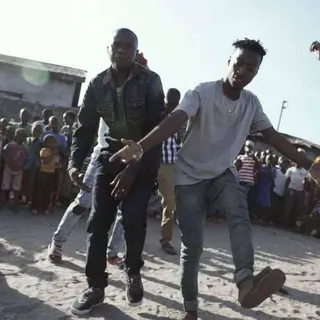
Singeli at up to 300 bpm, first at Nyege Nyege 2017

Singeli pushed faster and more frenetic, a mix from the future
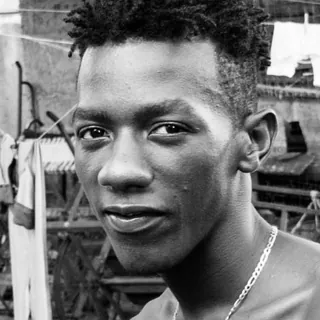

Hip-hop threaded through singeli from Sisso Studios, Mburahati
Singeli MC on the Pamoja roster, the No Visa Mix
Singeli from a Mburahati studio since 2013
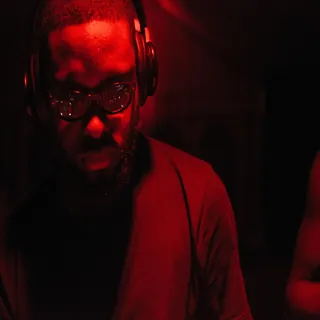
Curator of Ilé Ijó, where house meets drum and bass and singeli
Singeli from Dar es Salaam's producer core
A key singeli producer, named by Boiler Room
Questions about Singeli
What is singeli music?
A very fast Tanzanian electronic dance music, usually 200 to 300 BPM, with MCs rapping over looped, sped-up rhythms.[1][6]
Where does singeli come from?
The working-class neighbourhoods of Dar es Salaam, especially Tandale and Manzese, from the mid-2000s.[3][6]
What is the difference between singeli and mchiriku?
Mchiriku is an older Dar es Salaam style made on cheap Casio keyboards; singeli loops and speeds up mchiriku and taarab rhythms into its own faster electronic form.[4][5]
Sources
Last checked 16 October 2026 · Send a correction or a tip
- 1'This cuts across society': how singeli music went from Tanzania to the worldThe Guardian · 2018-12-17
- 2How singeli music went from Tanzania to the world (repost)Rewire Festival · 2018-12-17
- 3Sounds of Sisso (album notes)Nyege Nyege Tapes / Bandcamp · 2017-06-10
- 4New wave: East Africa's new waveBoiler Room · 2018-12-11
- 5Genre-bending explorations and remediations: a curated dive into Nyege Nyege Tapes (audio review)Cambridge University Press for the International Council for Traditions of Music and Dance · 2024-03-06
- 6Singeli (Wikipedia, lead only; cites Mukandabvute and Gores, Mulika Journal 2022, and Van der Stockt, Ghent University thesis 2019)Wikipedia · accessed 2026-10-16
- 7Playing with space and time: street sonics and electronic music production in Dar es Salaam (conference abstract)IASPM UK and Ireland conference · 2020
Other sounds on Pulse