What sudanese electronics is
Since the late 1980s, single keyboard players replaced costly live orchestras at weddings, with technicians in Omdurman market retuning Japanese keyboards for Sudanese polyrhythms and notes. Zanig pairs a keyboardist and singer with dubby slow starts, sudden accelerations and trance-like solos; darba adds faster solos and drums; jaglara, from the Fashaga area, is a fast, freestyled live keyboard music.[1][2][3]
Sudanese electronics, also written zanig, darba, jaglara (Fashaga electronic dance), Astro-Nubian electronic (Ostinato Records' term).
Tempo
Jaglara: 155 to 168 BPM. Zanig: no fixed tempo (it accelerates and decelerates)[3][1]. Ostinato Records gives 155 to 168 BPM for Jantra's jaglara. Le Guess Who? describes zanig's rapid accelerations and decelerations without a number.
On the Pulse map
Khartoum sits at 160 BPM (a published range of 155 to 168). That is each city's own pulse, not a figure for this sound.
Where it comes from
Sudan: Khartoum and Omdurman (keyboard modification), Gedarif and the Fashaga borderlands (jaglara), Port Sudan (Taz Waves) · Keyboards in Sudanese music from the 1980s (Ibrahim Al Hassan; 'The Chant of the Jinn' with Hanan Alnil, 1985); keyboards replacing orchestras from the late 1980s and 1990s; zanig pioneered in the 2010s[1][2][3]
- Ibrahim Al Hassan
credited with pioneering synthesisers in Sudanese music in the 1980s[1]
- Aiman Al Robu
pioneered zanig in the 2010s[1]
- Jantra
from Gedarif; freestyles for hours on a modified blue Yamaha; name means 'craziness'[3]
- Taz Waves (Zaher Nasr)
producer based in Port Sudan; 'The Electronic Sounds of Sudan' on his Basinkob label (2026)[2]
Who carried it
- Ostinato Recordslabel (New York)
'Synthesized Sudan: Astro-Nubian Electronic Jaglara Dance Sounds from the Fashaga Underground' (16 June 2023), the first professional recording of this music[3]
- Sudan Tapes Archivearchive
digitises Sudanese cassettes and shares them on SoundCloud[1]
- Basinkoblabel
Taz Waves' label[2]
- COSMOS (Le Guess Who?) and Refuge Worldwidefestival strand and radio
Tabideee's Sudanese Electronic Music mix (9 March 2026, per our data) and primer (22 April 2026)[1]
Moments
- 2010sBootleg zanig and darba spread through Bluetooth, SoundCloud, Facebook, WhatsApp and YouTube[1]
- 2023-04 onwardsWar in Sudan displaces artists and archives; the National Museum is looted[1]
- 2023-06-16Ostinato releases 'Synthesized Sudan' (Jantra)[3]
- 2026Taz Waves' 'The Electronic Sounds of Sudan' (OkayAfrica feature, 4 September 2026); Tabideee's COSMOS primer at Le Guess Who? (22 April 2026)[2][1]
The rooms it was made for
- Weddings
Modified keyboards became the 'one-man band' of Sudanese weddings when orchestras became too expensive.[2][1]
- Living rooms
Intergenerational house parties with live keyboard players, such as an aunt inviting an artist into her living room.[1]
- Compact rooms on the edge of the city
Jantra's parties happen in small spaces 'on the outskirts of the outskirts' of the capital; at the peak someone sometimes fires a pistol into the air.[3]
- Omdurman market repair stalls
Keyboard mechanics modify Yamahas to play Sudanese scales.[3][2]
- Packed zanig raves
Where the crowd is central to the music.[1]
Cities on Pulse
Cities whose signature sound or style tags include Sudanese electronics. The number is each city's own pulse tempo.
Artists on Pulse
4 artists and collectives tagged Sudanese electronics in our data, busiest cities first.
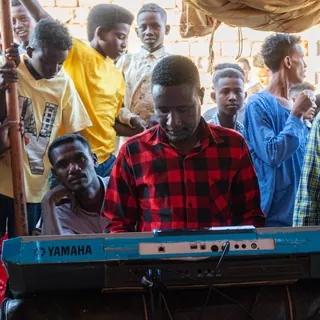
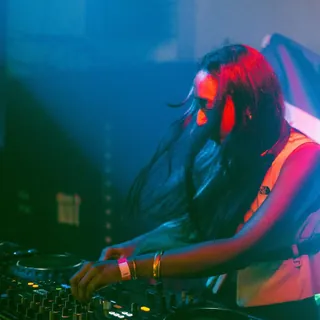
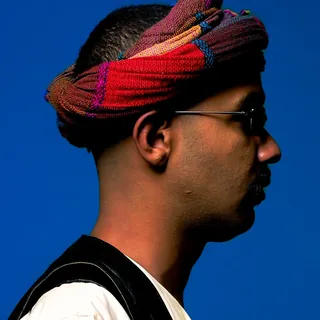
Deserty New Age on wedding-keyboard sounds from Port Sudan
Questions about Sudanese electronics
What is zanig music?
A Sudanese synth style for keyboardist and singer, pioneered by Aiman Al Robu in the 2010s, with slow dubby openings, sudden accelerations and trance-like solos. Le Guess Who? says the name comes from the Arabic for 'suffocation'.[1]
What is jaglara?
A fast keyboard dance music (155 to 168 BPM) from the Fashaga area near the Sudan-Ethiopia border, played live by Jantra.[3]
Why are keyboards so important in Sudanese music?
From the late 1980s, economic pressure made live orchestras too expensive, and modified Yamaha and Technics keyboards became a one-man band for weddings and parties.[2][1]
What is the difference between zanig and darba?
Darba is an evolution of zanig with faster solos and drums.[1]
Sources
Last checked 16 October 2026 · Send a correction or a tip
- 1'A culture I recognise myself in': Tabideee on Sudanese electronic musicLe Guess Who? (COSMOS) · 2026-04-22
- 2Taz Waves samples the past to synthesize the futureOkayAfrica · 2026-09-04
- 3Synthesized Sudan: Astro-Nubian electronic jaglara dance sounds from the Fashaga underground (album notes)Ostinato Records / Bandcamp · 2023-06-16
Other sounds on Pulse