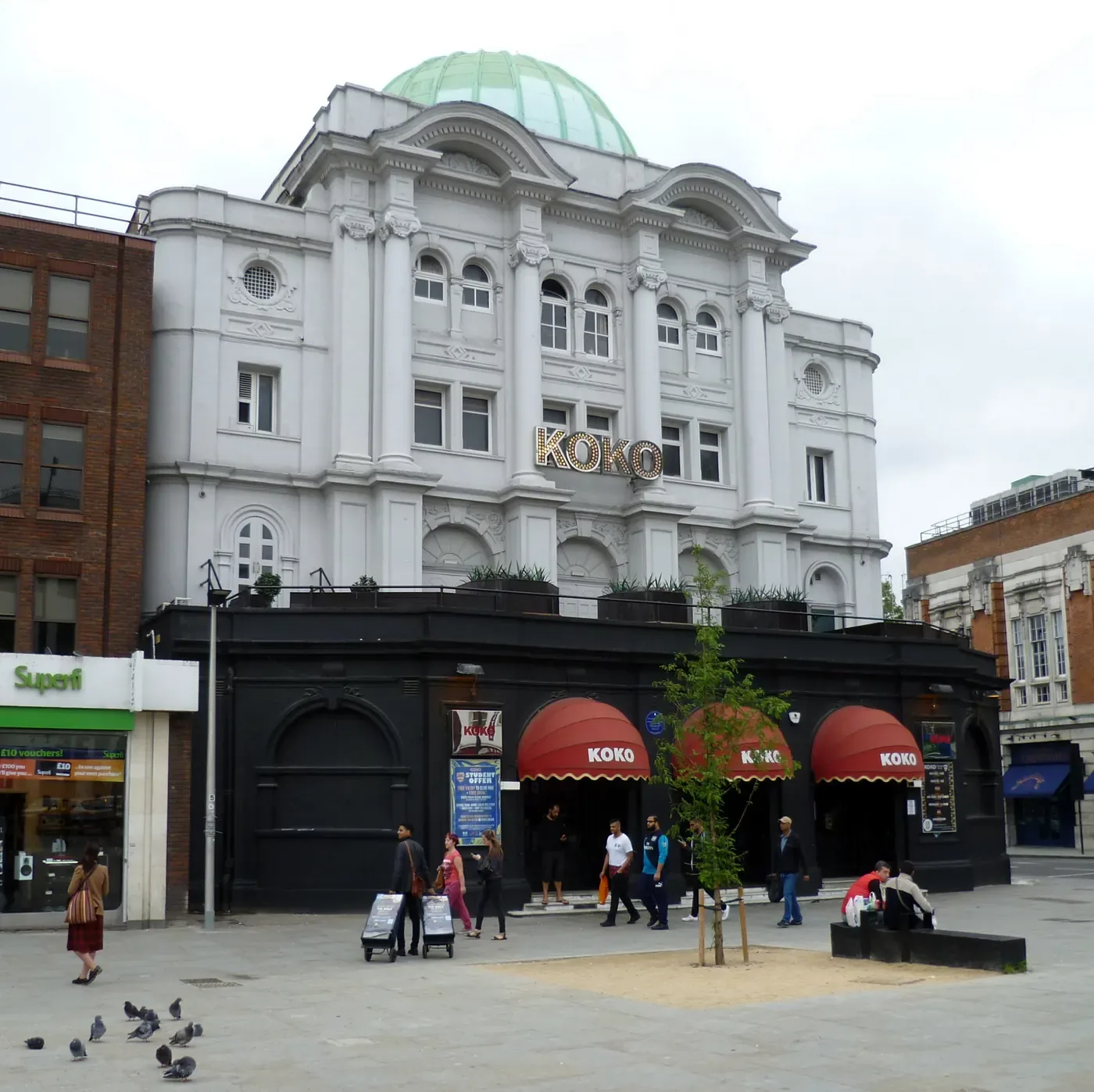
On Tuesday 3 November 2026 the Mayor of London became, in City Hall's words, the first UK mayor able to make a direct decision on a licensing application. The announcement says Sadiq Khan can now call in applications of strategic importance to London after a borough has decided them, and gives as examples large venues, live music, later opening hours, and major events and festivals. He marked the day at Blue Note, the jazz club whose London room opened in September, with the Secretary of State Angela Rayner.
If you go out in London, or travel to it for music, nothing on any door changed that night. No closing time moved, and no decision under the new power appears in anything we read up to 9 November. What changed is who gets the last word on a short list of applications, and that list is not yet fully public.
How a call-in works
The mechanics are in the Licensing Act 2003, as amended this year. Boroughs must tell the Greater London Authority about applications to sell alcohol, put on entertainment or serve late food, and City Hall can flag any of them as of potential strategic importance. The borough still hears the application and still decides. Under section 25B, if it refuses, or grants with conditions changed or parts cut, that decision has no effect until the Mayor has looked at it. By a deadline to be set in regulations, he must either confirm it or direct the borough, and he must give reasons. On our reading, a borough that grants exactly what was asked for is not caught.
Section 25C lists the directions, and it is narrower than the headlines. The Mayor can direct a grant as applied for, or a grant with modified conditions. Where the borough granted with its own changes, his modification must match the borough's or be, in his opinion, less restrictive. He can direct a refusal only where the borough had already refused. So the power runs one way: it can turn a no into a yes and loosen a yes, but it cannot turn a borough's yes into a no, or tighten a borough's conditions. He must have regard to the licensing objectives and to his own published policy.
Sections 34A, 41ZA and 41ZB apply the same scheme, with the same one-way limit, to applications to vary an existing licence, which is the route an existing venue takes to ask for later hours. Section 181 now provides for appeals to a magistrates' court against the Mayor's decisions as well as the borough's. City Hall adds that the four licensing objectives are unchanged and that residents can still have their say. We could not find the regulations that fix the Mayor's deadline.
Which applications count
This is the part still missing. City Hall says only that the Mayor can step in on applications that meet the Government's criteria, and does not print them. The nearest thing on the record is the draft London Strategic Licensing Policy, consulted on from 12 February to 27 March, which drew 2,418 responses. It proposed three tests: economic impact, location and reputation. Location took in the Central Activities Zone, the London Plan's main night-time areas, some larger town centres, and venues selling drink or putting on entertainment inside a borough's cumulative impact area. Events on a time-limited licence of three months or less were in. Off-licences, club certificates, temporary event notices and firework displays were out.
Those were proposals, marked as subject to change, and the final version has not appeared. The draft said routine decisions stay with boroughs and that the call-in would be used sparingly, as a last resort. A London Assembly committee paper in June said the pilot would run for a minimum of two years. The Assembly counts 36,000 licensed premises in London, 17 per cent of those in England and Wales, so sparingly will be doing some work in that sentence.
The rooms that live by a licence
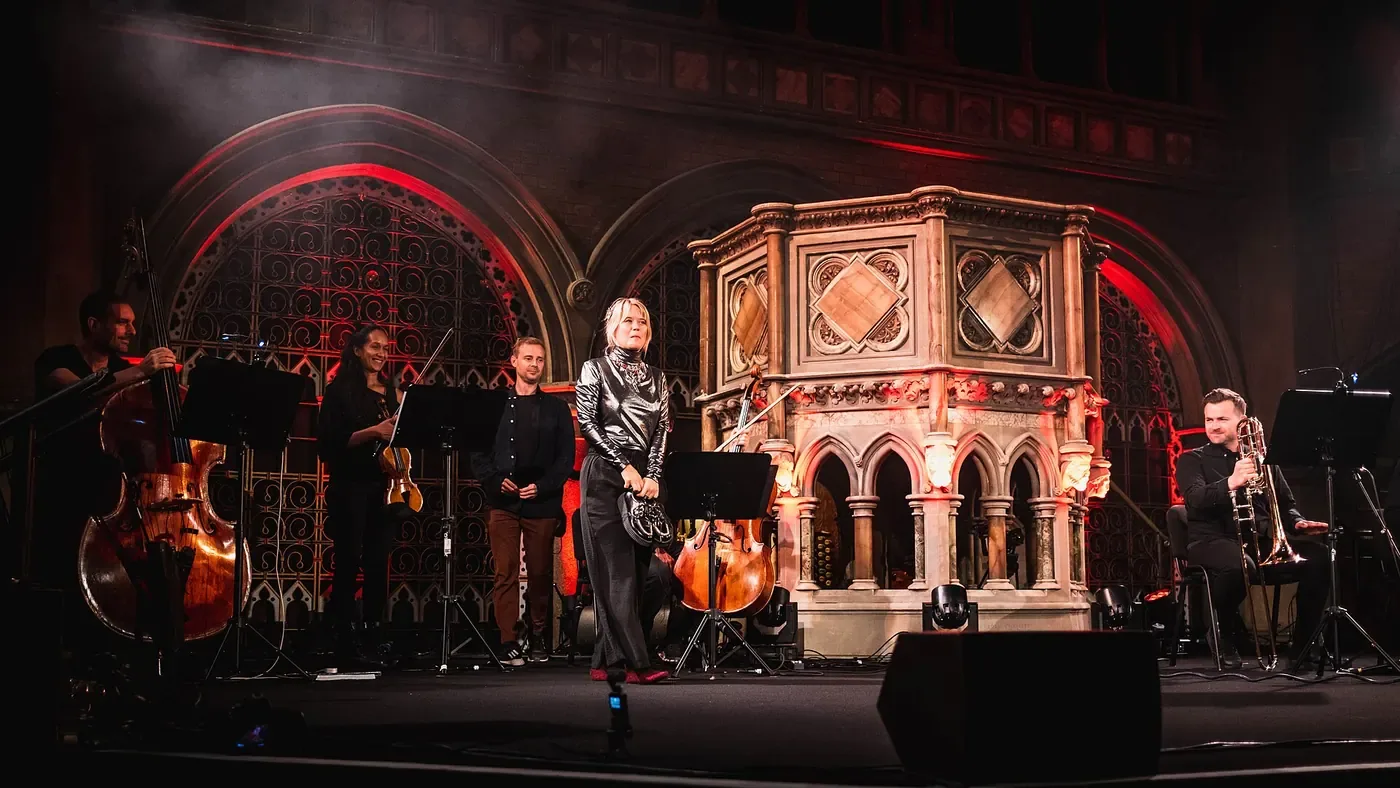
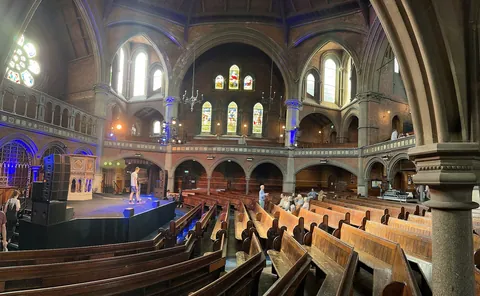
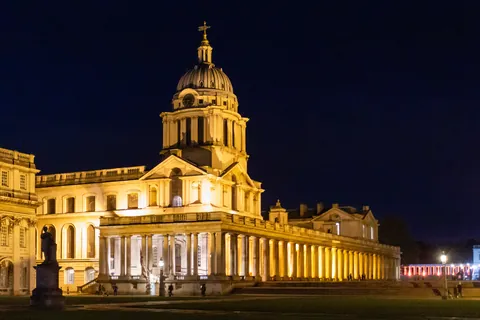
A premises licence says when a room may sell a drink, put on music and serve hot food after 11pm, which takes in most of what this atlas cares about in London: a theatre-sized venue such as KOKO in Camden, a terrace club such as Studio 338 in Greenwich, a working church that hosts concerts such as Union Chapel in Islington, a summer stage at the Old Royal Naval College. We have not checked the terms any of them holds, and none is the subject of a call-in that we know of.
The rooms with most at stake are the ones asking for something new: a listening bar that wants to play records past eleven, a club applying for later hours, a promoter seeking a short licence for a festival in a park. In Westminster the council's core hours end at 11pm, and in September it pressed on with plans to refuse new licences for pubs, bars and music venues across its cumulative impact zone in Soho and the West End, and to end standing at the bar with a drink, despite 81 per cent of consultation responses disagreeing. A refusal there, on an application City Hall flags, is exactly what the call-in can reach.
Who objects, and why
The boroughs objected on the day. London Councils, which speaks for them, said the scheme adds burdens for stretched licensing teams, and its executive member Jason Perry said it uses a definition of strategic importance "that is too broad". The group wants City Hall to be open about how applications are picked. Westminster made its case in February, when cabinet member Geoff Barraclough said the plan "means more red tape for business" and argued that effort would be better spent on late transport, business rates and public safety. In September its deputy leader, Tim Barnes, said the council's restrictions were aimed at excessive drunkenness and blamed thin police resourcing for many objections.
Residents have a case too. In June the Soho Society voted to challenge every new bar and restaurant licence application in Soho, and renewals with them, citing crime, noise and litter and saying growth in nightlife had not been matched by infrastructure. The Mayor's office called that decision the wrong one. The Music Venue Trust, the Night Time Industries Association and UKHospitality all welcomed the powers in City Hall's release. Both things can be true: a street can be too loud for the people who sleep on it, and a city can be refusing too many rooms.
The room that was saved another way
The same day, Mixmag reported that MOTH Club in Hackney was safe after two years of doubt. The threat was never its licence. Two planning applications were made in 2024 for development near the Valette Street venue, and the club warned of devastating consequences for its future. Councillors refused one, for six flats and a shop unit, in March 2026, and Mixmag reported on 3 November that the other had now been refused too, without giving a date. Along the way 35,000 people signed a petition and about 27,000 emailed their councillors.
The club thanked Hackney Council and its planners, and said the fight "was never just about MOTH Club". A call-in could not have helped here, because a planning application next door is not a licensing application. Rooms close for many reasons. The licence is one of them.
What to do with this if you are going out
For now, nothing differently. Hours on a venue's own listing are still the hours. If later licences do follow, they will arrive one application at a time, each with a borough decision first and a mayoral one after, and we will add them here as they are published. The more immediate limit on a London night is the one Time Out and Transport for London measured in research published on 5 November: 87 per cent of Londoners surveyed had chosen a venue or area because it was easier to get home from, 64 per cent counted live music among the parts of a night out they choose, and 80 per cent said affordability had got worse over ten years. Plan the last train before you plan the last drink.
Featured in this piece
The rooms and the people
Every place and artist in this piece has its own page in the atlas or on Pulse, with sources folded underneath.
FAQ
Questions people ask
What licensing powers does the Mayor of London have now?
Since 3 November 2026 the Mayor can call in licensing applications judged strategically important to London after a borough has decided them. City Hall also receives all applications, can make formal representations, must be consulted when boroughs revise their licensing policies, and must publish a London-wide Strategic Licensing Policy.
Can Sadiq Khan overrule a council that refuses a late licence?
For an application City Hall flags as strategically important, yes, on our reading. Under sections 25B and 25C of the Licensing Act 2003 a borough's refusal has no effect until the Mayor either confirms it or directs the borough to grant the licence, with or without conditions. The same applies to applications to vary an existing licence. The final criteria for which applications qualify had not been published in the sources we read on 9 November 2026.
Can the Mayor of London close a venue or take away a licence?
Not with this power, on our reading of sections 25C and 41ZB. He can direct a refusal only where the borough had already refused, and where the borough granted with changes he can only keep or loosen its conditions. Reviews and enforcement of existing licences stay with boroughs. This is our reading, not legal advice.
Will London clubs and bars stay open later now?
Not automatically. No closing time changed on 3 November 2026. Any later hours would come one application at a time, decided first by the borough and then, if called in, by the Mayor. We found no reported call-in decision as of 9 November 2026.
What do London's boroughs say about the Mayor's licensing powers?
London Councils said on 3 November 2026 that the definition of strategic importance is too broad and that the scheme adds burdens for stretched borough teams. Westminster City Council argued in February 2026 that the Mayor would decide within the same legal framework but without the same local knowledge. Industry bodies including the Music Venue Trust and the Night Time Industries Association welcomed the powers.
Was MOTH Club saved by the new licensing powers?
No. MOTH Club in Hackney was threatened by two planning applications for development nearby, not by a licensing decision. Hackney councillors refused one in March 2026, and Mixmag reported on 3 November 2026 that the other had also been refused, after a petition signed by 35,000 people.
AdStay near here
A bed close to the music
Find somewhere to stay in London through our accommodation partner, Stay22, which compares Booking.com, Expedia, Hotels.com, Agoda and others.
Opens Booking.com through Stay22 in a new tab. Links to accommodation on this page are affiliate links. If you book through one, Sonic Paths may earn a commission at no extra cost to you. Editorial decisions are never for sale.
Sources (20)
- London City Hall, Mayor hails new era for London's nightlife with historic licensing powers to help support businesses, jobs and venues, 3 Nov 2026
- legislation.gov.uk, Licensing Act 2003, section 25B, Power of the Mayor of London to determine applications, read 9 Nov 2026
- legislation.gov.uk, Licensing Act 2003, section 25C, Directions by the Mayor of London, read 9 Nov 2026
- legislation.gov.uk, Licensing Act 2003, section 8A, Greater London strategic licensing policy, read 9 Nov 2026
- legislation.gov.uk, Licensing Act 2003, section 17A, Licence applications of potential strategic importance: Greater London, read 9 Nov 2026
- legislation.gov.uk, Licensing Act 2003, section 34A, Applications to vary of potential strategic importance: Greater London, read 9 Nov 2026
- legislation.gov.uk, Licensing Act 2003, section 41ZA, Power of the Mayor of London to determine applications to vary, read 9 Nov 2026
- legislation.gov.uk, Licensing Act 2003, section 41ZB, Directions by the Mayor of London, read 9 Nov 2026
- legislation.gov.uk, Licensing Act 2003, section 181, Appeals against decisions of licensing authorities or the Mayor of London, read 9 Nov 2026
- London City Hall, Draft London Strategic Licensing Policy 2026 to 2031, consultation draft, Feb 2026
- Talk London, Mayor's strategic licensing consultation, 12 Feb to 27 Mar 2026
- London Assembly Economy, Culture and Skills Committee, Strategic Licensing Pilot in London, report of the Executive Director of Assembly Secretariat, 24 Jun 2026
- London Assembly, Does the Mayor's strategic licensing pilot go far enough?, 23 Jun 2026
- Local Government Lawyer, New mayoral licensing powers 'too broad', London Councils warn, 3 Nov 2026
- Fitzrovia News, Westminster council critical of Mayor's new licensing powers, 13 Feb 2026
- Mixmag (Gemma Ross), London Mayor Sadiq Khan gains licensing powers over music venues and festivals, 4 Nov 2026
- Mixmag (Gemma Ross), Soho residents' plea to block new bar licences, 8 Jun 2026
- Mixmag (Megan Townsend), Sadiq Khan criticises Westminster Council over new nightlife venues and vertical drinking, 10 Sep 2026
- Mixmag (Gemma Ross), MOTH Club saved from development plans after two years of uncertainty, 3 Nov 2026
- Time Out, London after dark has changed: new Time Out research, 5 Nov 2026
Every fact in this piece comes from one of these, read on 9 November 2026.