Peter Cat closed in 1981. On the weekend of 21 November 2026 it opened again, for about two hours at a time, on the stage of the Barbican Hall in London. A reproduction of the bar stood at stage left. About a dozen people sat at tables along the back of the stage. Three Japanese bands played, and short films and recorded narration ran between the sets. The Barbican billed it as a night staged as a Japanese listening club, made with Murakami's blessing, though he was not there.
Both Saturday shows sold out and a Sunday afternoon was added. UK Jazz News reviewed the first and called the stage decorated to resemble Peter Cat as it would have looked in its heyday. That is a big claim to make on a concert hall built for orchestras, and the reason it is worth writing about is the room it was copying.
The room that was
Haruki Murakami and his wife, Yoko, opened Peter Cat in 1974 in Kokubunji, a student district in the west of Tokyo. In his own account, they paid for it with a bank loan and money borrowed from friends and family, he brought an old upright piano from his parents' home, and young local musicians played at weekends. Later accounts put the first room in a basement near the station, coffee by day and drinks at night, with about 3,000 records. It was named after the couple's cat, Peter.
When the landlord rebuilt the building, they moved into the city, to a larger room in Sendagaya near Jingu Stadium, with space for a grand piano and, as Murakami tells it, bigger debts. Later accounts date the move to 1977 and describe a second-floor room with a wall of records, a wooden counter and cat ornaments.
The timeline, pressed as a record
Two rooms, two sides
Peter Cat ran from 1974 to 1981 in two rooms. Read it as an LP: a side for each room, a dated track for each turn, and a hidden track that surfaced in London 45 years after the bar closed.
Sound stays off until you press play. Then each track plays as the needle reaches it, and you can stop it any time. What played at Peter Cat was never written down anywhere we could find, so these are records tied to the story, from the artists' and labels' own YouTube uploads.
Side AKokubunji
A11974
Peter Cat opens
Kokubunji, in the west of Tokyo. Haruki and Yoko Murakami, a bank loan, and money borrowed from friends and family. He is still a student at Waseda.
Murakami, introduction to Wind/Pinball · Waseda
Moanin' · Art Blakey and the Jazz MessengersThe hit National Geographic ties to the start of Japan's jazz-kissa boom.
A2Weekends
The upright piano
An old upright from his parents’ home. Young local musicians at weekends. About 3,000 LPs on the shelves, by later accounts.
The piano and the weekends are his own account. The record count is not.
'Round Midnight · Thelonious MonkJunko Onishi opened the Barbican night with it, alone at the piano.
Turn overThe landlord rebuilds the Kokubunji building. The bar moves into the city.
Side BSendagaya
B11977
The move to Sendagaya
A larger room on a second floor near Jingu Stadium, with space for a grand piano. The debts grow with it.
The year comes from later accounts. Murakami’s own essay gives no date for the move.
Five Spot After Dark · Curtis Fuller with Benny GolsonThe Blend played it in London. Murakami's novel After Dark takes part of its name from it.
B2April 1978
The Jingu double
Opening day of the Central League season, Yakult Swallows v Hiroshima Carp. From the grass slope beyond the outfield he watches Dave Hilton double off Sotokoba’s first pitch, and knows he can write a novel.
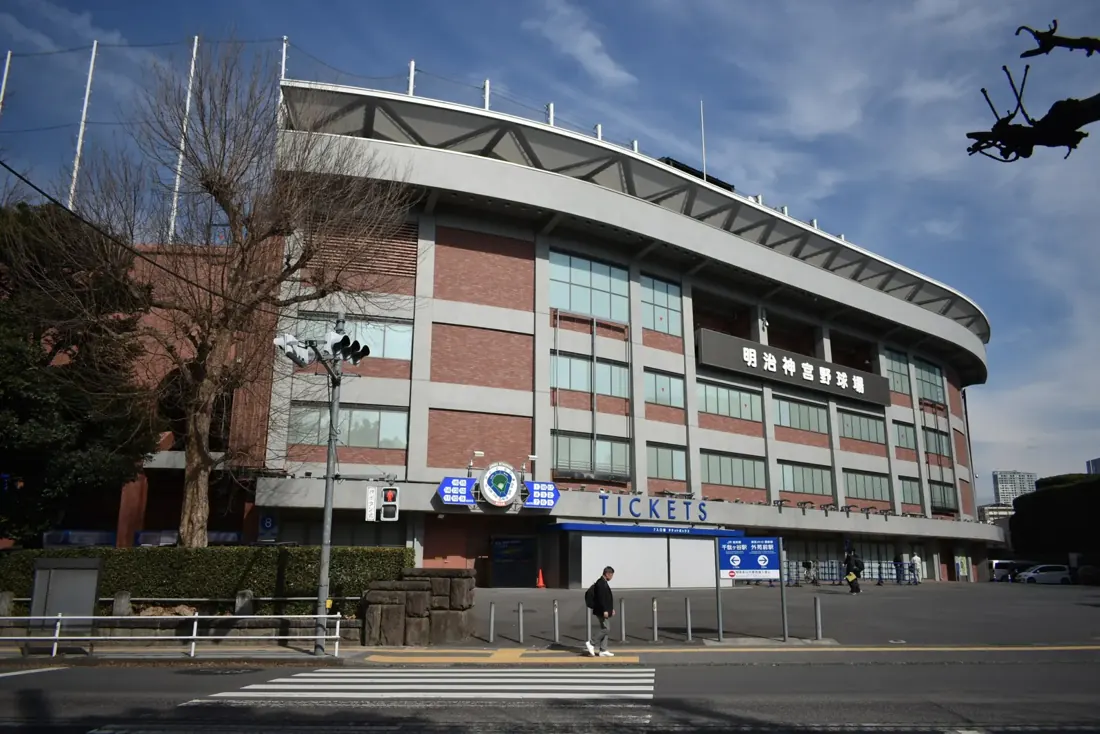
Meiji Jingu Stadium, Tokyo, 2019. The Star-Crossed Lovers · Duke EllingtonThe favourite song of Hajime, the jazz-bar owner in Murakami's South of the Border, West of the Sun.
B31979
The Gunzo prize
Hear the Wind Sing, about six months of nights at the kitchen table, wins the Gunzo New Writers Prize. In the same year Sachi Hayasaka works at the bar. She is on the Barbican stage 47 years later.
Hayasaka at Peter Cat in 1979: AnOther
Another Country · Sachi Hayasaka and Stir Up!Hayasaka worked at Peter Cat in 1979. TReS played this at the Barbican; this is her 1988 recording.
B41981
Peter Cat closes
The bar shuts so that he can write full time. Hear the Wind Sing was written while he ran it, at the kitchen table after closing.
The Jungler · Junko OnishiFrom her debut album, Wow. Onishi's trio played the first set in London.
Hidden trackLondon
+21–22 Nov 2026
Jazz at Peter Cat
Three shows on the stage of the Barbican Hall: Saturday at 5pm and 8.30pm, Sunday at 2pm. A reproduction of the bar stands at stage left.
Barbican listing · The Blue Moment
Norwegian Wood (This Bird Has Flown) · The BeatlesAll ten musicians closed the Barbican night with it. It also gave Murakami's best-known novel its title.
In April 1978 he went to the season opener at Jingu, sat on the grass slope beyond the outfield, and watched Dave Hilton hit a double off the first pitch. In that moment, he has written, he knew he could write a novel. He bought paper and a fountain pen in Shinjuku and wrote at night, after work, at the kitchen table. Hear the Wind Sing took about six months and won the Gunzo New Writers Prize in 1979. Two years later Peter Cat closed so that he could write full time.
“I sat at my kitchen table and wrote.”
Haruki Murakami, introduction to Wind/Pinball
What London heard
Junko Onishi, whom the festival's listing names as music director of Murakami's Murakami Jam concerts, opened alone at the piano with Monk's 'Round Midnight, then played with her trio, Kunpei Nakabayashi on bass and Sota Kira on drums. TReS is Sachi Hayasaka's family trio: her soprano and alto saxophones over Rio Nagata's baritone and Toshiki Nagata's double bass. Hayasaka was the night's direct line to the original room. She worked at Peter Cat in 1979, and AnOther reports that Murakami lent her records to practise with. Her set took in Danny Boy and My Favourite Things.
The Blend played Bobby Timmons' Moanin', the record National Geographic ties to the start of Japan's jazz-cafe boom. The band's founder, the bassist Yoshio "Chin" Suzuki, died on 23 September at 80, and the Barbican says the other four played on at his request. Richard Williams, writing on The Blue Moment, reports that all ten musicians finished together on Norwegian Wood, four horns over a Bo Diddley beat.
On stage · 21 and 22 November 2026
Ten players, three bands
Junko Onishi Trio
- Junko Onishipiano
- Kunpei Nakabayashibass
- Sota Kiradrums
TReS
- Sachi Hayasakasoprano and alto sax
- Rio Nagatabaritone sax
- Toshiki Nagatadouble bass
The Blend
- Keisuke Nakamuratrumpet
- Kosuke Minetenor sax
- Hakuei Kimpiano
- Tamaya Hondadrums
- Yoshio “Chin” Suzukiin memoriam · founder of The Blend · bass · died 23 September 2026
Some of what they played
- ’Round MidnightOnishi, alone
- Danny BoyTReS
- My Favourite ThingsTReS
- Another CountryTReS
- Monster’s TeardropsTReS
- Moanin’The Blend
- Five Spot After DarkThe Blend
- Norwegian Woodall ten
Who played and some of what, from the UK Jazz News and The Blue Moment reviews of 21 Nov. Not a full setlist.
What a jazz kissa is
Peter Cat belonged to a Japanese form, the jazz kissa: a cafe or bar built around a serious hi-fi and a large record collection, where the owner chooses what plays and many rooms ask for quiet. The first probably opened in 1929. The boom came in the 1960s and 1970s, after Moanin' and Art Blakey's tour of January 1961, and estimates of how many there were at the peak run to the hundreds. National Geographic counts about 400 today, and notes that the strictest forbid talking altogether.
That is the thread from Peter Cat to the listening bars on this site. The rules were never a style. They were the product. Murakami, who heard Art Blakey and the Jazz Messengers in Kobe at fifteen, has said that practically everything he knows about writing he learned from music.
Where to hear it now
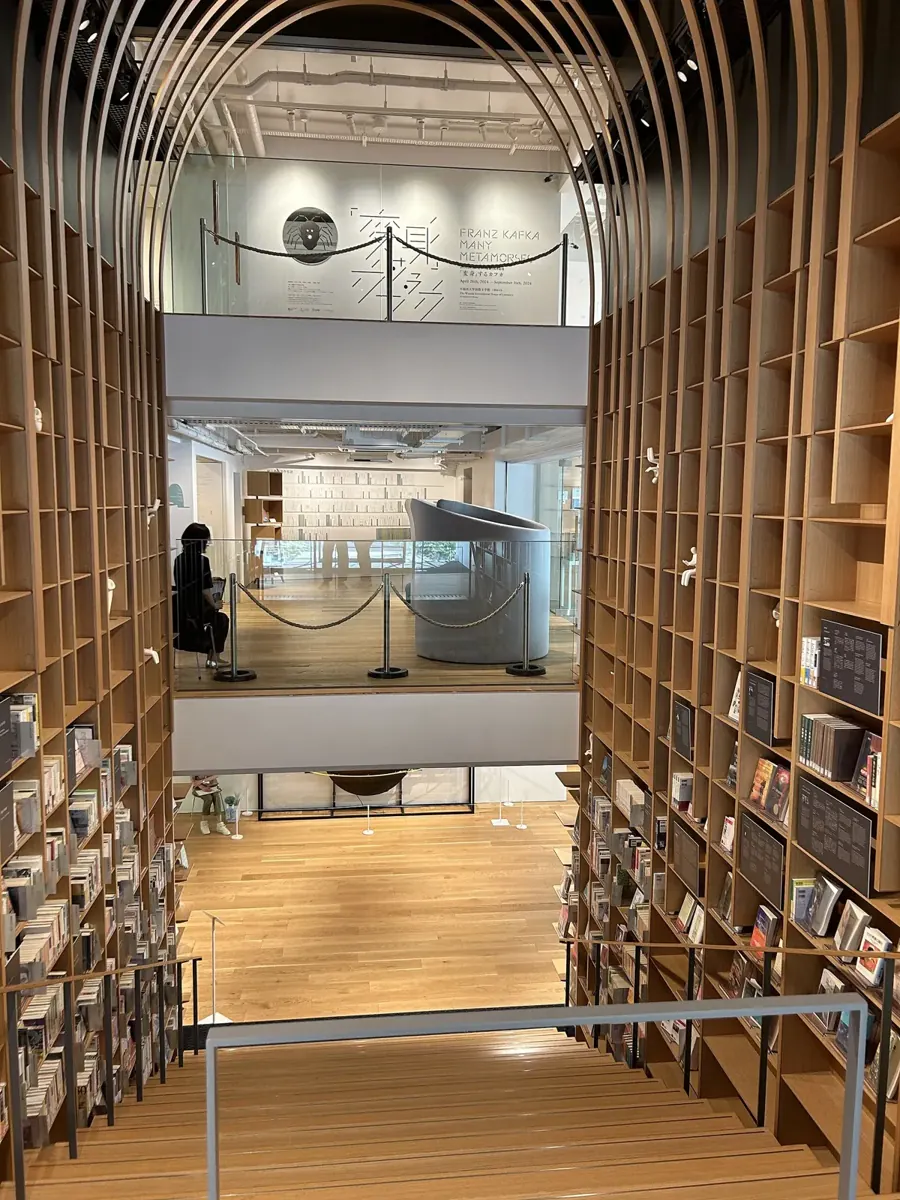
The rooms are gone, but not everything went. The Murakami Library at Waseda University, formally the Waseda International House of Literature, opened on 1 October 2021 in a building designed by Kengo Kuma. Waseda says its basement lounge holds a grand piano once used at Peter Cat, an audio room plays records donated from Murakami's own collection, which by most reports runs past 10,000, and the student-run cafe downstairs is called Orange Cat, after Peter.
In Sendagaya the second room is now an Italian bistro, Amphora, on the second floor of 1-7-12 Sendagaya, a few minutes' walk from the station. AnOther reports a Cheshire Cat illustration still on the wall. Two hours north by Shinkansen, Basie in Ichinoseki, open since 1970, keeps the old rules and irregular hours. In London, Spiritland's listening room on Level 2 of the Barbican, the same building the night was held in, runs to July 2027.
Four addresses
Where the traces are
-
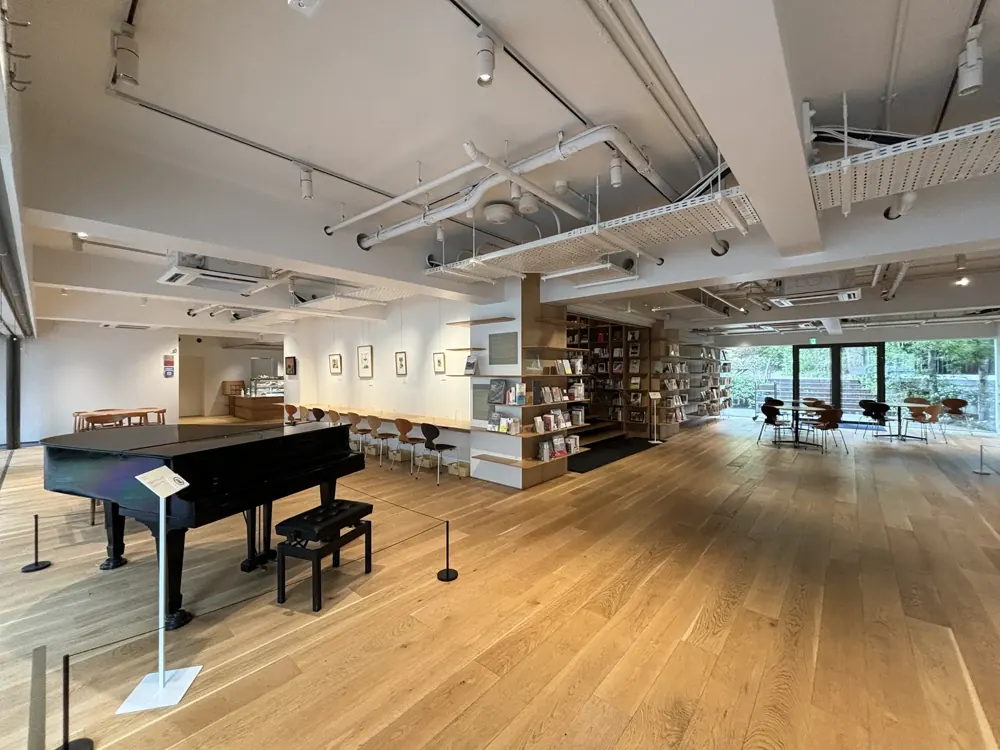
The B1 floor of the Murakami Library at Waseda, 2024.
01Waseda University, Tokyo
Murakami Library
Formally the Waseda International House of Literature. Opened 1 October 2021.
- B1 lounge
- A grand piano once used at Peter Cat
- 1F audio room
- His audio equipment and records he donated
- B1 cafe
- Orange Cat, run by students
-
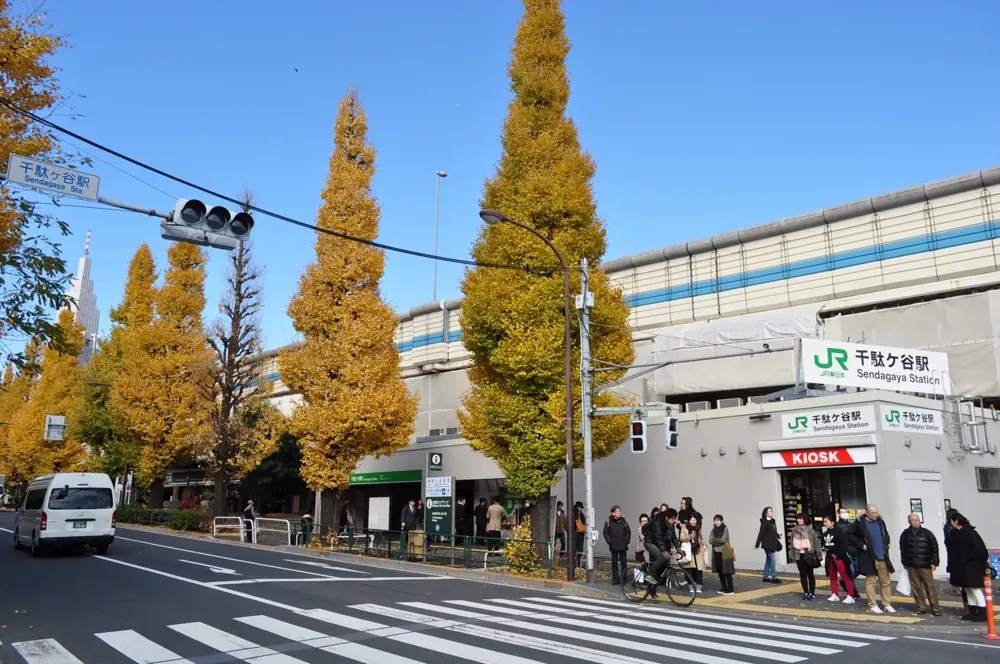
Sendagaya Station, Tokyo, with ginkgo trees in autumn yellow.
02Sendagaya, Tokyo
Amphora
The site of the second Peter Cat. A bistro now, not a jazz bar: Italian, on the second floor.
- Address
- 1-7-12 Sendagaya 2F, Shibuya-ku
- On foot
- About 4 minutes from Sendagaya Station
-
03Ichinoseki, Japan
Basie
A jazz kissa opened in 1970 by Shoji “Swifty” Sugawara in a family storehouse, with two fridge-sized speakers he built himself.
- Opening
- Some days only, often weekend afternoons, and it can close without notice. Reports differ on how often it has opened since the pandemic.
-
04The Barbican, London
Spiritland
A listening room in the same building as the Hall.
- Where
- Level 2 of the Barbican
- Open
- To July 2027
Liner notes
What we know, and what we could not confirm
What we know
- Three shows, not two. Saturday 21 November at 5pm and 8.30pm, Sunday 22 November at 2pm, from the Barbican’s own listing. Both Saturday shows sold out.
- Ten musicians, three bands. The names come from the Barbican and from two published reviews.
- 1974 to 1981. The opening in Kokubunji is in Murakami’s own account. The closing year is given by the Barbican and the festival.
- Murakami was not there. The night had his blessing, the Barbican says.
What we could not confirm
- The 1977 move. The date is from later accounts. Murakami’s own essay describes the move to Sendagaya without a year.
- The record collection. More than 10,000, by most reports. Some pages call the figure rumoured.
- The narrator. Recorded narration ran between the sets. No review names the voice.
- The jazz kissa peak. Hundreds. Published estimates run from about 600 to more than 800, and they differ.
- The full setlist. We list only the tunes the reviews name.
Nobody from Sonic Paths was at the Barbican. Read on 23 November 2026. Were you? Send us your review and, with your permission, it can run on What people said.
Film and photo credits
- Film: the Barbican Hall, animated with Higgsfield (Kling) from a photo by Kleon3, CC BY-SA 4.0. It shows the hall before a concert in April 2015, not the Peter Cat night.
- Meiji Jingu Stadium, 2019: 江戸村のとくぞう (Edomura no Tokuzo), CC BY-SA 4.0.
- Murakami Library stair: Bea Phi (Phibeatrice), CC BY-SA 4.0.
- Murakami Library B1 floor, 2024: Fotointheworld, CC BY 4.0.
- Sendagaya Station: 江戸村のとくぞう (Edomura no Tokuzo), CC BY-SA 4.0.
- All via Wikimedia Commons. Photos resized and cropped.
FAQ
Questions people ask
What was Peter Cat?
Peter Cat was the jazz bar Haruki Murakami ran with his wife, Yoko, in Tokyo: first in Kokubunji from 1974, then in a larger room in Sendagaya until it closed in 1981. It was named after their cat.
Can you visit Peter Cat today?
No. Both rooms are gone. The Sendagaya room is now an Italian bistro, Amphora, at 1-7-12 Sendagaya. The Murakami Library at Waseda University keeps a grand piano once used at Peter Cat and records from Murakami's collection.
What was Haruki Murakami's Jazz at Peter Cat at the Barbican?
Three shows at the Barbican Hall on 21 and 22 November 2026, part of the EFG London Jazz Festival, produced by Serious: the Junko Onishi Trio, TReS and The Blend, with the stage dressed as Peter Cat.
What is a jazz kissa?
A Japanese cafe or bar built around a serious hi-fi and a large record collection, where the owner chooses the records and many rooms ask customers to keep quiet.
AdStay near here
A bed close to the music
Find somewhere to stay in London through our accommodation partner, Stay22, which compares Booking.com, Expedia, Hotels.com, Agoda and others.
Opens Booking.com through Stay22 in a new tab. Links to accommodation on this page are affiliate links. If you book through one, Sonic Paths may earn a commission at no extra cost to you. Editorial decisions are never for sale.
Sources (12)
- Barbican: Haruki Murakami's Jazz at Peter Cat (listing)
- EFG London Jazz Festival listing
- UK Jazz News, Gareth Thomas, 22 Nov 2026
- The Blue Moment, Richard Williams, 22 Nov 2026
- AnOther, James Balmont, 17 Nov 2026
- Japan Nakama, Simon Martin, 5 Oct 2026
- Haruki Murakami, introduction to Wind/Pinball, on LitHub
- Waseda International House of Literature: facilities
- Waseda University news, 7 Oct 2021
- National Geographic, Joe Hagan, 5 Feb 2026
- Tabelog: Amphora, Sendagaya
- Time Out London, Ed Cunningham, 4 Nov 2026
Every fact in this piece comes from one of these, read on 23 November 2026.